.png)


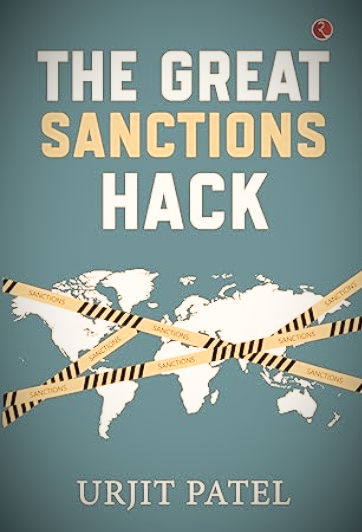
Book Review: The Great Sanctions Hack by Urjit Patel
- Economicstaan Official
- Jul 2
- 3 min read

An interesting book to read, in a time driven by the concept of tariffs. Considering the global financial system, it is highly volatile; the book comes at precisely the right time. In the world of trade, this book examines exclusive facts and details about how world trade has evolved. In particular, the different aspects of trade measures that the nations have taken are where a nation’s interest is put in the forefront. This book comes at a precise time when Trump comes all guns blazing with the “tariffs” imposed on all its trade partners. Initially, for me as an economist, it was difficult to understand the deeper implications of all this in terms of world trade; this book actually cleared all my doubts.
What this book speaks….
Banking systems did see systematic changes to cater to the new trade dynamics the world posed. It was a much-needed change, which succeeded fortunately, thanks to the technological changes evolving with the needs of time. It happened all thanks to the changes in the new political agenda that we see today.
The book intricately lays down the foundation of how the sanctions were laid out using secondary diplomatic tools, used by political leaders during different time periods. This did add to the slow fuel to the fire, causing macroeconomic adversities. Globally, due to all these actions, the global economy had to pay a price.
Another important aspect that one needs to understand is the suffocation caused by compliance in the financial warfare. Also, a clear distinction between the economic and kinetic warfare was well explained. In Patel’s book, he states that traditional warfare causes a lot of physical infrastructure damage, while the financial damage causes a major disruption of trade. A major disruption of a financial market is also seen by means of devaluation of the currency and supply shocks affecting all the manufacturing and services sectors alike.
There is also a major discussion of the use of the US dollar in world trade. Its dominance is also briefly described, and how it has influenced global trade. Development of the different transaction systems, such as SWIFT, has become more of a surveillance mechanism to cope with world trade and a matter of survival in the competition. He further argued that any attempt to deviate from this norm would lead to economic elimination or complete removal from the international marketplace. This was a shocking reveal.
Countries in the Global South increasingly view the global financial system as structurally biased rather than merely outdated. Patel argues that "de-dollarisation" and the creation of alternative financial institutions are practical ways to reduce dependence on a system that can be used as a geopolitical tool. In essence, when a shared financial system becomes a source of vulnerability, countries seek alternative networks to protect their interests.
This book also has a USP of helping readers understand the concepts through formulas and variables. It is an extensive attempt by the author to explain concepts and ideas in a detailed form, to get the readers' attention to the real issues pertaining to the ideas presented. The permutations and combinations of variables make the concepts all the more interesting.
Closing pointers
The book is a must-read to understand what is happening in the world today. Understanding the fact that sanctions as a means to prevent wars is one standout takeaway from the whole book. The book also points out how the Western world has manipulated the world enough to take complete control in its fingertips. The West has made sure to use the dollar as its key weapon to keep the world in check- play by the rules, or else get wiped off the map completely. It does sound a bit scary, but it is the blunt truth in short.
The book can be purchased with the link below. Do share your feedback about the book as well


Interesting read,